
Acoustic Flooring for Schools and Offices | Reduce Noise with the Right Floors
Published by Diane Conti with AI Generated Content on Mar 25th 2026
What Flooring Offers Acoustic Benefits for Offices and Classrooms?
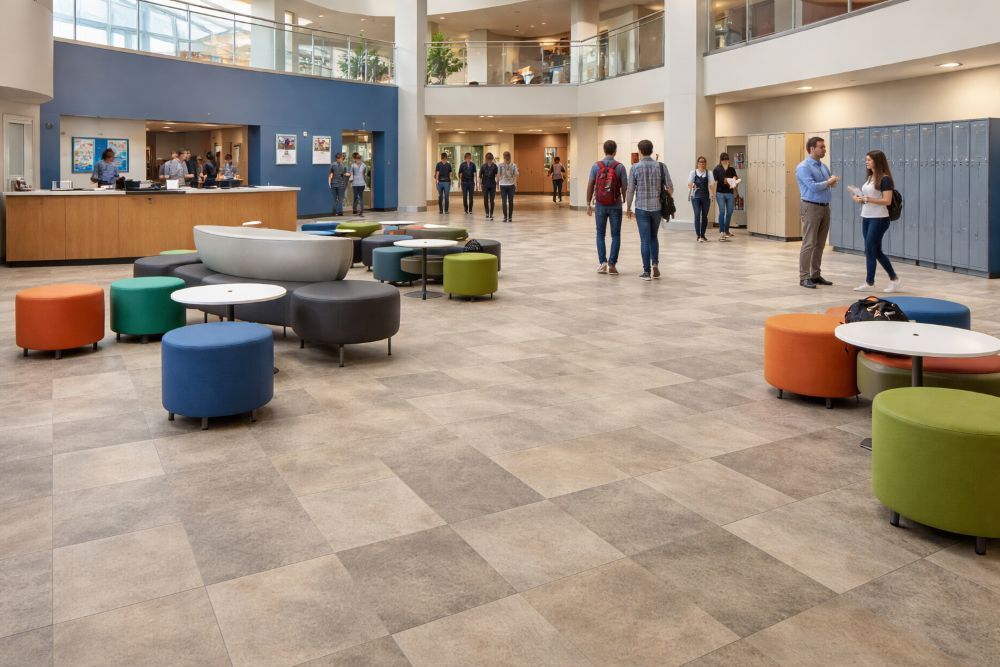 Excess noise is a common challenge in both offices and classrooms—impacting concentration, communication, and overall comfort. While ceilings and walls often get the most attention in acoustic design, flooring plays a major role in controlling sound.
If you're looking to reduce noise without major renovations, choosing the right flooring is one of the most effective and budget-friendly solutions.
Why Acoustic Flooring Matters
In busy environments like schools and workplaces, sound travels quickly—especially across hard surfaces. The right flooring helps:
- Reduce footstep and impact noise
- Minimize echo and reverberation
- Improve speech clarity in classrooms and common areas
- Enhance focus and productivity in offices
Whether you're managing a K-12 facility or a government office workspace, acoustic-friendly flooring can significantly improve the environment.
Flooring Types That Offer Acoustic Benefits
1. Carpet Tile
Carpet tile is often considered the top choice for sound control.
Why it works:
- Soft fibers absorb airborne sound
- Backing systems reduce impact noise
- Limits sound transfer between floors
Ideal for: Classrooms, libraries, administrative offices, and conference rooms
Bonus: Easy to replace individual tiles, making it practical for high-use spaces.
2. Broadloom Carpet
Wall-to-wall carpet provides a high level of sound absorption.
Why it works:
- Continuous surface eliminates gaps for sound reflection
- Dense padding enhances acoustic performance
Ideal for: Auditoriums, media centers, and private offices
Consideration: Higher maintenance and less flexibility than carpet tile.
3. Rubber Flooring
Rubber flooring is a strong performer in high-traffic environments.
Why it works:
- Absorbs impact sounds and reduces vibrations
- Reduces noise from movement and equipment
Ideal for: Hallways, gyms, and multipurpose rooms
Bonus: Slip-resistant and long-lasting.
4. Luxury Vinyl Tile (LVT) and Acoustic Backing Options
Standard hard surfaces can be noisy, but newer LVT products are engineered for better acoustics.
Why it works:
- Integrated acoustic layers reduce impact sound
- Performs better than traditional VCT or ceramic tile
Ideal for: Classrooms and offices needing durability with moderate sound control
Tip: Look for products with enhanced IIC ratings or attached underlayment.
5. Sheet Vinyl Flooring
Sheet vinyl is an often-overlooked option that can provide meaningful acoustic benefits—especially in healthcare and education environments.
Why it works:
- Fewer seams reduce sound vibration and transfer
- Can be paired with cushioned or foam backings to absorb impact noise
- Softer surface than tile or concrete reduces footstep sound
Ideal for: Classrooms, nurse’s offices, restrooms, and administrative areas
Additional Benefits:
- Seamless installation improves hygiene and moisture resistance
- Easy to clean and maintain for custodial teams
- More forgiving underfoot than harder surfaces
Best Use Case: When you need a balance of acoustic control, durability, and sanitation
Underlayments That Improve Flooring Acoustic Performance
In many cases, the biggest acoustic upgrade doesn’t come from the flooring itself—but from what’s installed beneath it.
Common Acoustic Underlayment Options:
1. Rubber Underlayments
- Excellent impact sound reduction
- Durable and long-lasting
- Ideal under LVT, sheet vinyl, and laminate
2. Foam Underlayments
- Lightweight and cost-effective
- Provides moderate sound absorption
- Common under floating floors
3. Cork-Rubber Blends
- Combines resilience with sound control
- Often used in multi-story buildings
4. Felt or Fiber Underlayments
- Dense structure helps absorb airborne sound
- Improves overall floor comfort
Understanding Acoustic Ratings
When evaluating underlayments and flooring systems, you’ll often see these key acoustic metrics:
- Impact Insulation Class (IIC): Measures how well a floor assembly reduces impact noise (like footsteps or dropped objects) traveling through the floor. Higher IIC ratings mean better sound isolation between floors.
- Sound Transmission Class (STC): Measures how well sound is blocked from traveling between rooms or levels (airborne noise like voices or music). Higher STC ratings indicate better soundproofing performance.
- Sound Absorption Average (SAA): Measures how much sound a material absorbs within a space rather than reflecting it. Higher SAA values reduce echo and reverberation, improving overall room acoustics.
Why Underlayments Matter
- Improve IIC ratings for better impact noise control
- Support higher STC performance in multi-level buildings
- Enhance SAA performance when paired with the right flooring
- Reduce sound transmission between floors
- Increase comfort underfoot
Best Applications: Classrooms on upper floors, office buildings, and renovation projects where structural changes aren’t feasible.
Flooring to Avoid for Noise Control
Some flooring types tend to amplify sound rather than absorb it:
- Polished concrete
- Ceramic or porcelain tile
- Standard VCT (without acoustic backing)
These may still be appropriate in certain areas but typically require additional acoustic treatments.
Key Factors to Consider
When selecting acoustic flooring, keep these in mind:
- Traffic level: High-traffic areas need durable yet sound-absorbing materials
- Maintenance requirements: Balance performance with your custodial capacity
- Budget: Consider lifecycle cost, not just upfront pricing
- Space function: Match flooring to how the room is used
Final Thoughts
So, what flooring offers the best acoustic benefits?
For most offices and classrooms, carpet tile leads the way, followed by broadloom carpet for maximum absorption. Sheet vinyl and acoustic-backed LVT provide an excellent middle ground—especially when paired with the right acoustic underlayment to further reduce noise.
By combining the right flooring system with underlayment, facilities can dramatically improve sound control without major renovations.
Explore Flooring Solutions
Looking for solutions that balance performance, durability, and budget? Visit shop.continentalflooring.com to explore acoustic-friendly flooring and underlayment systems designed specifically for schools, government facilities, and commercial spaces.