
Materials Only vs. Turnkey Installation: What Government Buyers Should Know
Published by Diane Conti with AI Created Content on May 13th 2026
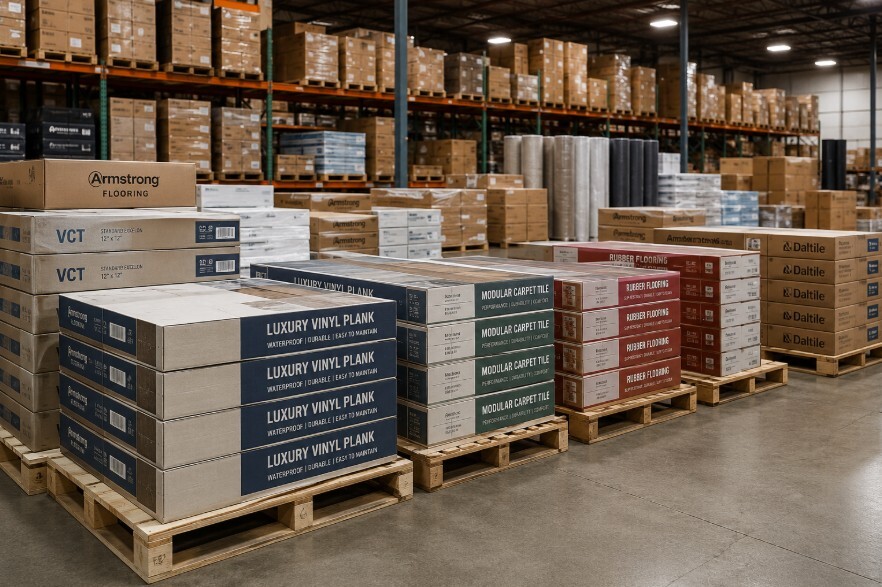
Government agencies and public sector facility managers are often faced with an important project decision: should flooring and ceiling products be purchased as materials only, or should the project include complete turnkey installation services?
The answer depends on project scope, internal staffing resources, timelines, procurement requirements, and facility conditions. Understanding the differences between these purchasing approaches can help agencies improve efficiency, control costs, and simplify project coordination.
At Continental Flooring Company, government buyers have access to both options — from manufacturer direct product fulfillment to fully managed installation services nationwide.
What Is a Materials-Only Purchase?
A materials-only purchase allows agencies to procure commercial flooring, ceiling systems, wall base, tile, or acoustical products without bundled installation labor.
In this model:
- Products are purchased directly from awarded contracts, quotes, and bids
- Materials are shipped directly from the manufacturer or distribution network
- Installation is handled internally or by a local contractor
- Agencies maintain greater control over scheduling and labor
This approach is common for:
- Military facilities
- School districts
- Municipal maintenance departments
- Housing authorities / multi-family housing (HUD / PHA)
- Facilities with in-house installers
Benefits of Materials-Only Purchasing
Lower Overall Project Costs
Agencies that already have labor resources may reduce project expenses by purchasing products separately from installation services.
Manufacturer Direct Shipping
Many commercial flooring and ceiling products can be shipped directly from the mill or manufacturer to the project site, helping reduce handling time and simplifying logistics.
Faster Procurement
Using cooperative purchasing contracts or awarded government contracts streamlines purchasing while maintaining compliance requirements.
Popular purchasing vehicles may include:
- GSA Schedule
- State level contracts like CMAS and CES
- OMNIA Partners
- Allied States
- 1GPA
Flexible Installation Scheduling
Facilities can schedule installation phases around occupancy needs, school calendars, or operational requirements.
What Is Turnkey Installation?
Turnkey installation combines both material procurement and professional installation services into one coordinated project solution. Continental Flooring Company offers tenant-occupied flooring installation services nationwide.
This approach includes:
- Product sourcing
- Material logistics
- Site coordination
- Flooring demolition
- Moisture mitigation
- Professional installation
- Project management
Turnkey services are especially valuable for complex or occupied environments where coordination and scheduling are critical.
Benefits of Turnkey Flooring Installation
Single-Source Accountability
Government buyers work with one experienced project partner instead of coordinating multiple vendors and contractors. Purchase orders with Continental Flooring Company can include products from multiple suppliers as well as flooring installation services.
Simplified Project Management
Turnkey solutions reduce administrative burden by centralizing scheduling, delivery coordination, installation oversight, and communication.
Reduced Facility Disruption
Experienced installation teams can phase work strategically to minimize interruptions in:
- Healthcare facilities
- Schools and universities
- Government offices
- Multi-family housing
- Tenant-occupied spaces
Professional Installation Standards
Commercial flooring systems often require manufacturer-approved installation methods to maximize product performance and warranty protection.
When Materials-Only Purchasing Makes Sense
Materials-only procurement may be ideal when:
- The agency has qualified in-house installers
- Labor contracts are already secured
- Projects are smaller in scope
- Installation timing needs flexibility
- The facility handles maintenance internally
Examples include:
- VCT replacement projects
- Carpet tile refreshes
- Ceiling tile replacement
- Stair tread replacement
- Small phased renovations
When Turnkey Installation Is the Better Choice
Turnkey services are often preferred when:
- Professional flooring crews are needed
- Occupied facilities require careful coordination
- Specialized flooring systems are specified
- Project size and scope exceeds that of inhouse labor
- Moisture mitigation or floor preparation is required
- Agencies want reduced administrative oversight
- Utilization of a contract to aid in the procurement process
Examples include:
- Hospital renovations
- Courthouse upgrades
- University remodels
- Large office renovations
- Public housing renovations
- Multi-building replacement programs
Combining Both Approaches
Some government agencies benefit from a hybrid strategy.
For example:
- Materials may be purchased through cooperative contracts
- Local labor may be coordinated separately
- Flooring installation is offered on contract and materials and labor can be procured
- Certain facility areas may require turnkey support while others remain self-performed
This flexible approach helps agencies optimize budgets while maintaining project control.
Supporting Government Buyers Nationwide
Continental Flooring Company supports government agencies with:
- Commercial flooring products
- Ceiling and grid systems
- Acoustical wall panels
- In-ceiling air filtration / purification
- Energy-saving ceiling systems
- Manufacturer direct shipping
- Nationwide flooring installation services
- Cooperative contract purchasing
- Materials-only procurement options
Facility buyers can also purchase many products online through shop.continentalflooring.com. The online shop offers the convenience purchasing multiple types of products and cooperative contract utilization.
Whether your project requires materials only, complete turnkey commercial flooring installation, or a combination of both, selecting the right procurement strategy can help improve efficiency, simplify coordination, and maximize long-term facility value.