
Why Rubber and Vinyl Stair Treads Are Ideal for Government Facilities
Published by Diane Conti with AI Created Content on May 4th 2026
Introduction
In government facilities—where high foot traffic, strict safety standards, and long-term budgets all intersect—every material choice matters. Stairways, in particular, are critical transition points that must balance durability with safety. Rubber and vinyl stair treads have become go-to solutions for public sector buildings because they address both concerns effectively while supporting compliance and lifecycle cost efficiency.
Built for High-Traffic Durability
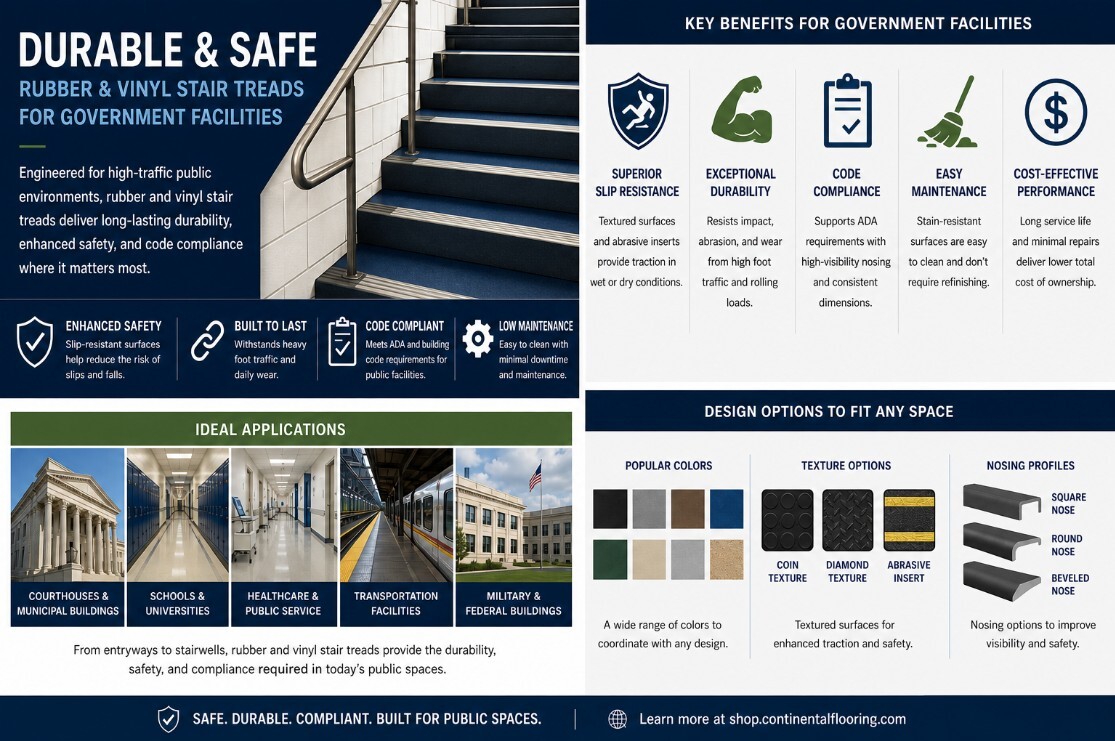
Government buildings such as courthouses, schools, transportation hubs, and administrative offices see constant daily use. Staircases endure concentrated wear from foot traffic, rolling loads, and environmental debris.
Rubber and vinyl stair treads are engineered to withstand this kind of stress:
- Impact Resistance: Both materials absorb shock, reducing cracking and surface damage over time.
- Wear Layer Strength: Vinyl treads often include reinforced wear layers that resist scuffing and abrasion.
- Flexible Composition: Rubber naturally resists chipping and maintains integrity even under heavy use.
Unlike traditional materials that may require frequent repairs or replacement, these resilient options maintain their performance and appearance for years, reducing maintenance disruptions in active facilities.
Enhanced Slip Resistance for Safety
Safety is a top priority in government environments, especially in stairwells where slips and falls are more likely to occur. Rubber and vinyl stair treads are specifically designed to improve traction:
- Textured Surfaces: Raised patterns and abrasive inserts provide grip under both dry and wet conditions.
- Consistent Performance: Unlike coatings that can wear off, the slip-resistant properties are built into the material.
- Moisture Resistance: Ideal for entryways or interior stair cases, reducing the risk of accidents. (Metal stair treads are available for exterior installations.)
- Grit Strips: Add an extra layer of slip resistance with grit strips. They are easy to apply and available in different widths and colors. Glow-in-the-dark stripes are also a great option.
These features help facilities meet safety standards while protecting occupants, staff, and visitors.
Code Compliance and Accessibility
Public buildings must adhere to strict regulations, including ADA (Americans with Disabilities Act) requirements and local building codes. Rubber and vinyl stair treads support compliance by offering:
- High-Visibility Nosing Options: Contrasting colors improve edge visibility for safer navigation.
- Uniform Dimensions: Manufactured to meet consistent sizing and slope requirements.
- Fire and Smoke Ratings: Many products meet or exceed required performance standards.
Choosing compliant materials simplifies the specification process and ensures long-term regulatory alignment.
Ease of Maintenance
Maintenance teams in government facilities often operate with limited time and resources. Rubber and vinyl stair treads offer practical advantages:
- Low Maintenance Cleaning: Routine sweeping and damp mopping are typically sufficient.
- Stain Resistance: Surfaces resist dirt, scuffs, and common contaminants.
- No Refinishing Required: Unlike wood or coated systems, these materials don’t require periodic sealing or refinishing.
This translates to lower ongoing labor costs and fewer disruptions to building operations.
Cost-Effective Lifecycle Performance
While initial material costs are always a consideration, government buyers increasingly focus on lifecycle value. Rubber and vinyl stair treads deliver:
- Long Service Life: Reduced need for replacement lowers total cost of ownership.
- Minimal Repairs: Durable construction prevents costly damage.
- Efficient Installation: Many systems are designed for quick installation, reducing downtime.
When evaluated over time, these materials often outperform alternatives in both cost and performance.
Design Flexibility for Public Spaces
Function doesn’t have to come at the expense of aesthetics. Today’s rubber and vinyl stair treads are available in a wide range of:
- Colors and patterns
- Nosing profiles
- Coordinating flooring options
This allows government facilities to maintain a cohesive design across corridors, stairwells, and common areas while still prioritizing safety.
Ideal Applications in Government Facilities
Rubber and vinyl stair treads are particularly well-suited for:
- Educational institutions (K-12 and higher education)
- Municipal buildings and courthouses
- Healthcare and public service facilities
- Transportation terminals and transit stations
- Military and federal buildings
Any environment that requires durability, safety, and compliance can benefit from these solutions.
Conclusion
Rubber and vinyl stair treads offer a reliable, long-term solution for government facilities seeking to enhance safety without sacrificing durability. Their ability to withstand heavy traffic, improve slip resistance, and meet strict regulatory standards makes them a smart investment for public sector projects.
For facility managers and procurement professionals, selecting the right stair tread system isn’t just about meeting today’s needs—it’s about ensuring performance, safety, and value for years to come.
Utilize our online shop to order stair treads and more for your facility. Products are available from multiple manufacturers and can be quickly purchased using our GSA, Omnia Partners, 1GPA Contract, CMAS and other cooperative contracts. Learn more about our contracts here.